Fort Myers, FL · Leak Detection Guide

High Water Bill With No Visible Leak in Fort Myers, FL: What to Check First

A water bill that suddenly doubles is stressful enough. When there is no puddle, no drip, and no stain anywhere in the house, it feels impossible — where could the water possibly be going? In Fort Myers, the answer is usually underground or inside the structure, where sandy soil and a high water table swallow leaked water before it ever reaches the surface. The good news: you do not need tools or a plumber's visit to find out whether you really have a leak. Your water meter already knows, and the test below takes one quiet evening.

Published November 8, 2026 · Water Leak Repair Fort Myers FL

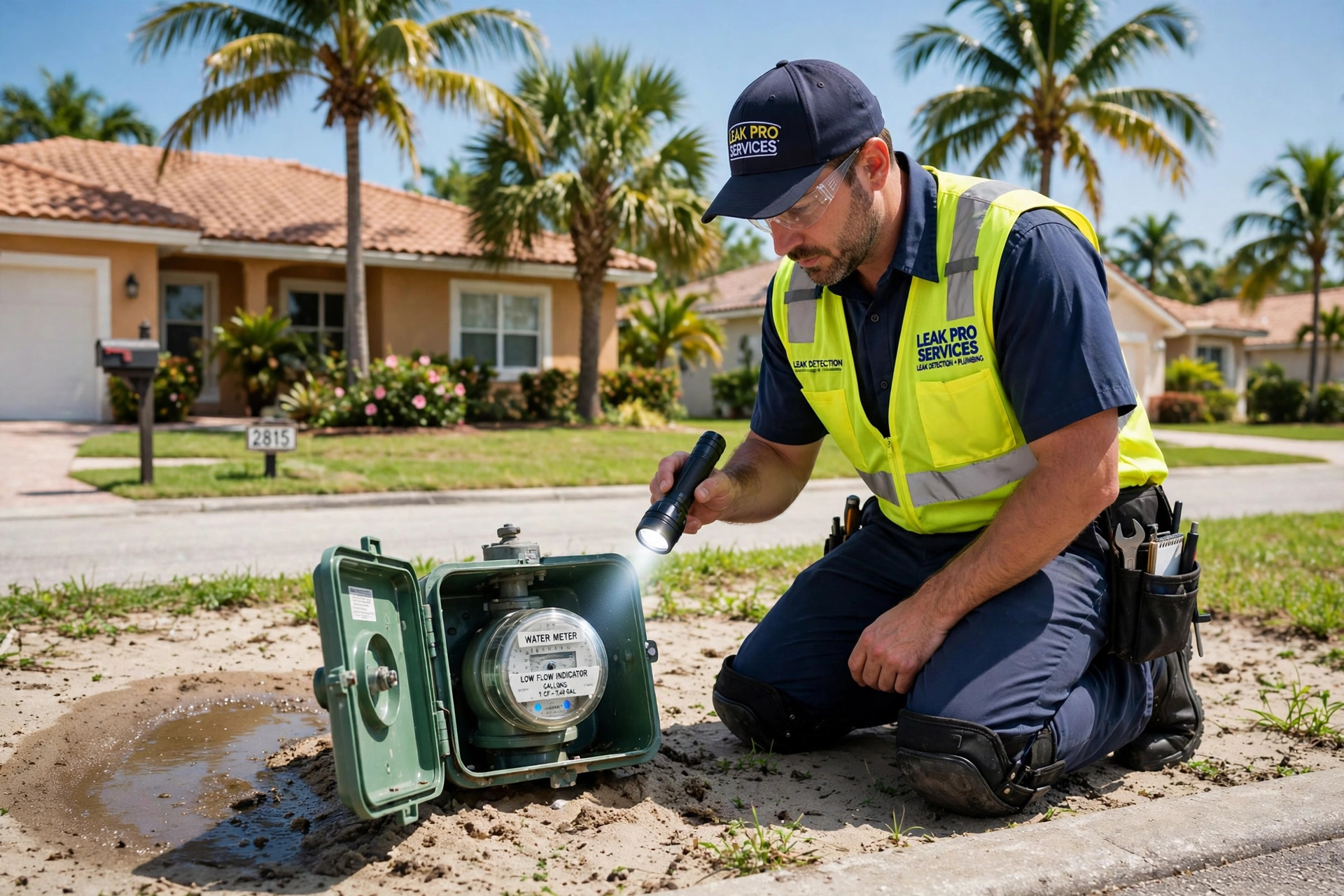
Leak detection technician checking a water meter for a hidden leak at a Fort Myers FL home
DIRECT ANSWER

High Water Bill With No Visible Leak in Fort Myers, FL: What to Check First

If your Fort Myers water bill jumped but you cannot see a leak, the water is almost always escaping somewhere hidden — most often a toilet that runs silently, a slab leak under the concrete floor, a leaking underground supply line between the meter and the house, or a faulty irrigation or pool auto-fill valve. Because Fort Myers sewer charges are based on water usage, one hidden leak inflates both halves of the bill. A simple two-hour water meter test, described below, confirms in one evening whether water is still moving through your system with everything turned off.

Before You Panic

First, Check the Bill Itself

Not every shocking bill is a leak. Before you test a single pipe, compare the usage on this bill with the same month last year — gallons (or CCF), not dollars. Rates, tier thresholds, and fixed fees change, and a longer billing cycle can add several days of normal use. Look for the word "estimated" on the statement: an estimated read followed by an actual read can dump two months of under-counted usage into one bill.

One Fort Myers detail catches many homeowners off guard: sewer charges are calculated from your water usage. That means a single hidden leak raises both the water and sewer portions of the bill — which is why a modest leak can produce an outsized total, and why fixing it quickly matters.

The Meter Test

The 2-Hour Water Meter Test: Prove Whether You Have a Leak

This is the same first step every leak detection professional takes, and it costs nothing.

  1. Turn off every water-using fixture and appliance: faucets, showers, dishwasher, washing machine, ice maker, irrigation system, and pool auto-fill.
  2. Find your water meter — in most Fort Myers neighborhoods it sits in a covered box near the street or sidewalk.
  3. Write down the meter reading, or take a clear photo. Note the small triangle, star, or sweep hand — that is the low-flow indicator, and it moves with even a trickle.
  4. Wait at least two hours with zero water use. Overnight works even better. Do not flush any toilet during the test.
  5. Read the meter again. If the reading changed, or the low-flow indicator is creeping, water is moving somewhere it should not be.
Pro tip

If the low-flow indicator spins steadily the moment you look at it with everything off, skip the waiting period — you already have your answer. Take a photo of the dial for your records before you do anything else.

Split the Search: Underground Line or Inside the House?

If the meter moved, one more test cuts your search area in half. Close your home's main shutoff valve (usually where the supply line enters the house or garage) and watch the meter again for 15–20 minutes.

  • Meter still moving with the house shut off: the loss is between the meter and the house — an underground supply line leak. This is exactly the kind of problem underground water leak detection is built to pinpoint without digging up the yard.
  • Meter stops completely: the leak is inside the home or under the slab, and the fixture checks below come next.
DIY Checks

What to Check Next, Room by Room

Start with the toilets — a worn flapper or a faulty fill valve is the single most common cause of a mystery high bill, silently sending water from tank to bowl around the clock. Add a few drops of dark food coloring to each toilet tank, do not flush, and wait 15–20 minutes. Color appearing in the bowl means that toilet is leaking.

Then work through the rest of the usual suspects:

  • Irrigation system: walk the yard looking for one patch that is greener, softer, or wetter than the rest, and check the controller for extra programmed cycles after storms or power outages — a real issue during Fort Myers' rainy season.
  • Pool auto-fill: a stuck auto-fill valve tops the pool up continuously and can quietly add thousands of gallons a month.
  • Water softener: a softener stuck in its regeneration cycle drains water for hours at a time.
  • Water heater and hose bibs: check the heater's pressure relief valve discharge pipe and every outdoor spigot for slow drips.

If every one of these checks comes back clean but the meter still moves, the leak is almost certainly concealed — in a wall, under the floor, or below the slab — and that is where hidden water leak detection earns its keep.

Hidden Causes

The Leaks That Never Show a Puddle

Hidden causeTelltale signsWhy you cannot see it
Slab leakWarm spot on tile or laminate, sound of running water with everything off, water heater cycling more oftenThe line runs under the concrete slab; water spreads into the soil below
Underground supply line leakMeter moves with the house shut off, one soggy strip of yard, drop in water pressureSandy Fort Myers soil drains the water away before it surfaces
Running toiletPhantom refills, gentle hissing, dye test colors the bowlWater flows tank-to-bowl internally and straight down the drain
Wall or ceiling pipe leakMusty smell, soft drywall, a stain that slowly growsThe leak soaks insulation and framing long before it stains the surface

Fort Myers homes are mostly slab-on-grade construction, and many have decades-old copper or galvanized lines running beneath that slab. Corrosion, shifting sandy soil, and high water pressure slowly open pinholes in those lines. A pinhole leak can lose hundreds of gallons a day — the EPA estimates the average household leak wastes about 10,000 gallons a year, and a slab leak sits at the expensive end of that range. Because the water escapes into the ground, the only early warning most homeowners get is the bill itself. Slab leak detection uses acoustic listening and thermal imaging to locate the break through the concrete, so a repair opens the smallest possible area.

When to Call a Pro

Signs It Is Time to Stop Testing and Call

Do-it-yourself checks confirm that you have a leak; they rarely find where it is. Call a professional when:

  • The meter test confirms water loss but every fixture check comes back clean
  • You feel a warm patch on the floor or hear running water with everything off
  • Your bill has climbed two months in a row with no change in household use
  • You notice a musty smell, buckling flooring, or a spreading ceiling stain
  • Water pressure has dropped noticeably — a sign the underground line is losing serious volume

A professional water leak detection visit uses acoustic sensors, thermal cameras, and pressure testing to pinpoint the failure before anyone cuts, digs, or demolishes — and once it is found, targeted water leak repair fixes the actual pipe instead of a guessed-at section. Ask for the detection findings in writing: many utilities, including those serving Lee County, offer a one-time leak adjustment on your bill when you can document that a hidden leak was found and repaired, so keep the invoice and your meter-test photos.

Whether you live in Downtown Fort Myers, Iona, San Carlos Park, or South Fort Myers, the sequence is the same: check the bill, run the meter test, isolate the zone, then bring in detection equipment for anything still hiding. Every week a hidden leak runs, it is adding to the bill, feeding moisture into your slab and walls, and raising the eventual repair cost.

FAQ

High Water Bill Questions Fort Myers Homeowners Ask

Yes. A longer billing cycle, an estimated meter read catching up, a rate or tier change, houseguests, a new pool fill, or an irrigation controller running extra cycles can all raise the bill with no leak involved. That is why the first step is comparing billed usage — not the dollar total — against the same month last year, and why the meter test matters: if the meter sits perfectly still during two hours of zero use, you do not have an active leak.

Far more than most people expect. A toilet with a worn flapper can lose 200 gallons or more per day without making a sound, and a pinhole slab leak can lose several hundred gallons daily. The EPA's WaterSense program estimates that household leaks waste nearly 10,000 gallons per home per year on average — and because Fort Myers sewer charges follow water usage, a hidden leak effectively bills you twice for the same lost water.

Without tearing anything open first. Technicians combine acoustic listening equipment (pressurized water escaping a pipe makes a distinct sound), thermal imaging cameras that reveal the temperature signature of wet areas under floors and inside walls, and pressure testing that isolates which line is losing water. Together these methods typically narrow a hidden leak to a small, specific area, so any opening made for the repair stays as small as possible.

Yes — once the leak is fixed, the next full billing cycle should reflect your normal usage again, because the meter only registers water that actually passes through it. Keep your repair invoice and any detection report: many utilities serving the Fort Myers area will review a one-time leak adjustment for the inflated bill when you can document that a hidden leak was located and repaired.

If the meter test shows a fast-moving leak, or you see active water damage spreading, yes — close the main shutoff valve and call for emergency help rather than letting it run. For a slow hidden leak with no visible damage, you can usually keep the water on for essentials while you schedule detection promptly, but do not put it off: under-slab and in-wall leaks get more destructive, and more expensive, with every week they run.

Bill Still Climbing? Get the Leak Pinpointed

Our 24/7 dispatch connects Fort Myers homeowners with local leak detection pros who find the leak before anyone cuts, digs, or demolishes — day or night, anywhere in Lee County.