Fort Myers, FL · Leak Detection Guide

How Much Does Underground Water Leak Detection Cost in Fort Myers, FL?

A water bill that jumps for no reason, a soggy patch of lawn that never dries, a warm spot on the floor — any of these can mean a water line is leaking underground, and the first question every Fort Myers homeowner asks is the same: what will it cost to find it? The honest answer is that detection and repair are two different jobs with two different bills, and knowing the detection price before you book keeps you from paying for the wrong thing. In Fort Myers, a standard underground leak detection visit runs $199–$450, and the price depends mostly on which method your leak actually needs — not on how worried you are. Here is the full breakdown, what each method does, and the free checks worth doing before you spend a dollar.

Published November 18, 2026 · Water Leak Repair Fort Myers FL

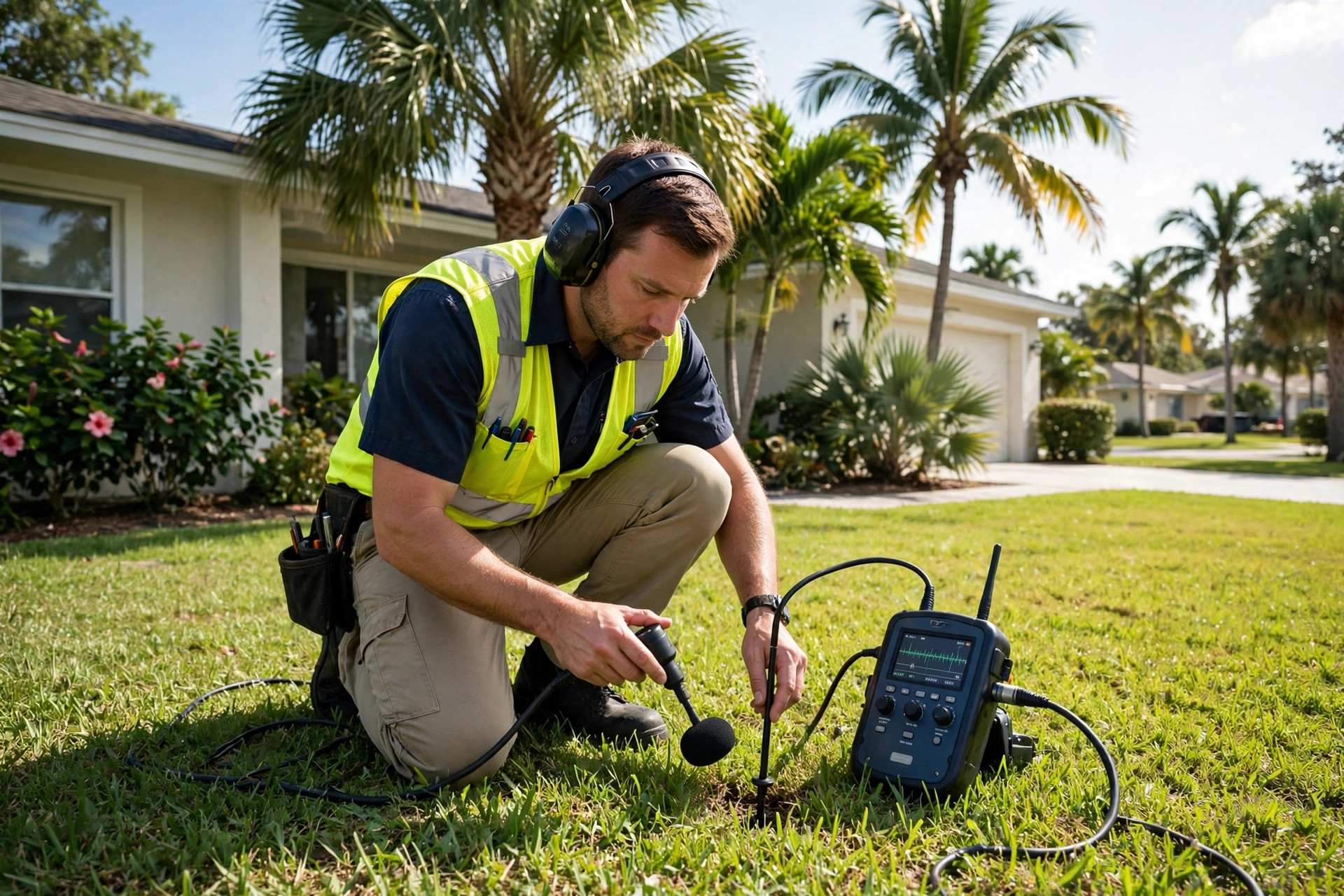
Leak detection technician using acoustic listening equipment and ground microphones to locate an underground water leak in a Fort Myers, Florida front yard
DIRECT ANSWER

How Much Does Underground Water Leak Detection Cost in Fort Myers, FL?

Underground water leak detection in Fort Myers, FL typically costs $199–$450 for a standard electronic detection visit, and $300–$800 when the leak is under a concrete slab and needs acoustic plus thermal locating. A basic diagnostic check can run as low as $80–$150, while a complex job using tracer gas or ground-penetrating radar can reach $600 or more. The visit usually takes 1 to 3 hours and pinpoints the leak within about 1 to 3 feet — before any digging or concrete is broken. Detection is a separate charge from the repair, and most Fort Myers companies quote the detection price upfront before any work starts, so ask for the written price, which methods are included, and whether the fee is credited toward the repair if you proceed.

Cost Table

Underground Water Leak Detection Cost in Fort Myers, FL

Detection serviceTypical Fort Myers price (2026)What it covers
Basic diagnostic / meter and listening check$80–$150Meter test, pressure check, listening on exposed pipe — confirms a leak exists
Electronic leak detection$199–$450Non-invasive acoustic listening and line tracing to locate the leak
Slab leak location$300–$800Acoustic + thermal imaging to pinpoint a leak under the concrete slab
Full acoustic + thermal + camera detection$300–$600Combined methods for a hard-to-find or multi-line leak
Tracer gas or ground-penetrating radar$400–$800+Advanced locating for deep, complex, or hard-to-trace underground lines
Emergency / after-hours detection visit$150–$400+Same methods, priced higher for nights and weekends

These are planning ranges for residential work in the Fort Myers area, not binding quotes. Your exact price depends on the severity of the problem, how deep the line is buried, how much access the technician has, and the time of day. Every reputable company in town quotes the detection price upfront before work starts — if a company will not give you a written number before it begins, that is a reason to call someone else.

What Included

What a Detection Visit Actually Includes

A professional detection visit is not someone walking around your yard with a stethoscope. A standard visit takes 1 to 3 hours and usually follows the same sequence: the technician reads the water meter and tests line pressure to confirm a leak is really there, isolates sections of the line to narrow down which run is losing water, then uses listening and imaging equipment to pinpoint the break — typically within about 1 to 3 feet — before any digging or concrete is broken. You should get the location marked on the ground or floor, photos of the evidence, and a written finding you can use for the repair quote or an insurance claim.

That last part matters. The detection fee buys you a location, not a repair. Once the leak is found, the repair is quoted separately — an accessible leak repair often runs $200–$600, while a slab leak repair can run $1,000–$4,000 depending on access. Some companies credit the detection fee toward the repair if you hire them to fix it; ask before you book, because that credit can effectively make the detection free.

Pro tip

Ask for the quote in writing, with the methods named. "Leak detection" can mean a $80 meter check or a $600 multi-method trace — and the price difference is entirely in which tools are used. A written quote that names the methods is the only way to compare two companies fairly.

Methods

The Detection Methods, and When Each One Is Used

Not every leak needs every tool, and the cheapest visit is the one that uses the right tool the first time. Here is what the methods actually do:

Acoustic listening — $250–$500. The workhorse for pressurized supply lines. Sensitive ground microphones and headphones amplify the sound of water escaping from a buried pipe, and a correlator can measure the sound from two points to calculate the leak's position. Accuracy is high — usually within 1 to 2 feet — and it works best on metal and plastic lines under pressure. This is the method behind most $199–$450 electronic detection visits in Fort Myers.

Thermal imaging — $300–$600. An infrared camera reads temperature differences on floors and surfaces. It is especially effective for hot water line leaks under a slab, where the leaking water warms the concrete above it, and for moisture behind walls and under flooring. It is almost always paired with acoustic listening for slab work, which is why slab leak location runs $300–$800.

Pressure testing and line isolation. The technician pressurizes one section of pipe at a time and watches whether it holds. This does not locate the leak by itself, but it proves which line is leaking — the main supply, an irrigation run, or a branch to the house — so the expensive listening work starts on the right pipe.

Tracer gas — $400–$800+. A harmless gas is pushed into the drained line, and a sensitive sniffer detects where it escapes through the soil. Used when acoustic listening cannot hear the leak — very deep lines, plastic pipe in sandy soil, or a leak too small to make enough noise.

Ground-penetrating radar (GPR). Radar maps buried objects and voids, which helps when the pipe's route is unknown or the line runs under a driveway. It locates the pipe, not the leak itself, so it is usually combined with acoustic or tracer gas work on complex jobs.

Meter testing — often free or low-cost. Reading the meter with all fixtures off is the simplest confirmation a leak exists. If the meter moves with everything shut off, water is going somewhere. Many companies fold this into the service call, and you can do a version of it yourself before booking (see below).

Cost Drivers

What Makes the Price Go Up or Down

Five things move the number more than anything else:

  1. Depth and access. A line 18 inches under a lawn is cheap to trace. A line under a concrete driveway, a pool deck, or a slab foundation takes more time and more methods — and that is where prices climb toward $600 and beyond.
  2. Pipe material and soil. Fort Myers' sandy soil carries sound differently than clay, and plastic pipe transmits less noise than copper. A quiet leak in sandy soil may need tracer gas where a loud one in copper needs only a microphone.
  3. How many lines are suspect. A single main line is one job. A property with a main line, an irrigation system, and a pool line that all need checking is three jobs, and the price reflects it.
  4. Time of day. Emergency and after-hours visits carry a premium — typically $150–$400 for the visit itself, before any repair. A leak that can wait until morning is usually cheaper to detect.
  5. Whether it is detection or repair. This is the most common surprise on the bill. Detection finds the leak; repair fixes it. A company that quotes "$199 leak detection" is not quoting the repair, and a company that offers a "free inspection" is usually offering a visual look, not diagnostic testing. Ask exactly what tests the visit covers before you agree.
Warning

A "free leak detection" offer is almost never free diagnostic testing. It is usually a free visual inspection or a free estimate — the technician looks, then quotes the paid testing. That is not dishonest, but it is not detection either. Before you book, ask: does the free visit include acoustic listening, a pressure test, and a marked location — or just a look and a quote?

Free Checks

The Free Checks to Try Before You Book

You can confirm a leak exists — and sometimes find it — without paying anyone. Do these first:

The meter test. Turn off every faucet, appliance, and irrigation zone in the house. Go to the water meter and watch the dial or the low-flow indicator for 15 minutes. If it moves with everything off, water is leaving the system somewhere. Note the reading, wait an hour, and read it again — the difference is your leak rate.

The WaterSmart check. If your home has a smart meter through the City of Fort Myers Utilities or Lee County Utilities, the WaterSmart portal shows hourly usage. A leak shows up as continuous low-level flow, including overnight when nobody is using water. A sudden jump on the graph is the leak's start date — and that date is useful evidence for insurance.

The yard and floor walk. Look for a patch of lawn that is greener or soggier than the rest, a driveway or walkway that stays damp, a warm spot on a tile floor, or a faint sound of running water when the house is quiet. In slab-on-grade homes — which is most of Fort Myers — a hot water line leak under the slab often shows up first as one warm tile, not as visible water.

The irrigation isolation test. Turn off the irrigation system's main valve and repeat the meter test. If the meter stops, the leak is in the irrigation system, not the house supply — a much cheaper problem to fix, and one you can describe precisely when you call.

If the meter test confirms a leak but you cannot see or hear it, that is exactly when professional underground water leak detection earns its fee: the leak is real, it is hidden, and guessing where to dig costs far more than locating it first. The EPA estimates the average household leak wastes nearly 10,000 gallons of water a year — at Fort Myers water rates, a leak you ignore for months can cost more in wasted water than the detection visit would have.

Fort Myers

Why Underground Leaks Are Different in Fort Myers

Fort Myers is built mostly slab-on-grade, which means the supply lines run under or through the concrete foundation, not through a basement or crawl space. There is nowhere for a leak to show itself — no puddle in a basement, no drip in a crawl space. The first signs are usually the bill, a warm floor, or a damp patch in the yard. That is why detection here is almost always electronic: acoustic listening and thermal imaging, not a visual inspection.

The sandy soil matters too. Water from a buried leak drains down through sand quickly, so the surface may stay dry even while a leak runs for weeks — and the leak's sound is muffled compared to denser soil. Add the high water table in parts of Lee County, and a leak can be hard to distinguish from groundwater without proper equipment. A company that works in Fort Myers every day knows this; a general plumber with a single listening device may not.

Irrigation is the third Fort Myers factor. Lawns, palms, and tropical plantings drink heavily, and a stuck irrigation valve or a cracked lateral line can waste thousands of gallons while looking like normal watering. Before any detection visit, isolate the irrigation system as described above — it narrows the search and can save you from paying to detect a leak that is not in the house line at all. If the leak is in the main supply, main water line leak repair is the next step once the location is marked.

Whether you live in Downtown Fort Myers, San Carlos Park, Iona, or South Fort Myers, the process is the same: confirm the leak with the meter and WaterSmart, get a written detection quote that names the methods, and insist on a marked location and photos before anyone breaks concrete. If the leak is inside the walls rather than underground, hidden water leak detection is the right service — and if water is already coming through a ceiling or floor, call for emergency water leak repair right away, because detection can wait but active water damage cannot.

FAQ

Underground Water Leak Detection Cost: Homeowners Ask

A standard electronic detection visit in Fort Myers typically costs $199–$450. Slab leak location using acoustic plus thermal imaging runs $300–$800, and complex jobs using tracer gas or ground-penetrating radar can reach $600 or more. A basic diagnostic check can be as low as $80–$150. Detection is charged separately from the repair.

Usually not. A "free inspection" or "free estimate" is typically a visual look and a quote — not diagnostic testing with acoustic listening, pressure testing, or thermal imaging. Some companies waive or credit the detection fee if you hire them for the repair, and some apply the service call (often around $68) toward the work. Always ask what tests are included before you book.

Most residential detection visits take 1 to 3 hours. The technician confirms the leak with a meter and pressure test, isolates the leaking line, then locates the break — usually within about 1 to 3 feet — using acoustic listening, thermal imaging, or tracer gas. Complex properties with multiple lines can take longer.

Sometimes, if the detection is part of a covered claim — for example, a sudden pipe failure that caused water damage. Many policies cover the resulting damage but not the cost of locating a slow, long-running leak, which insurers may treat as maintenance. Check your policy's wording on "tear-out" and "access" coverage, and keep the written detection report and photos for your claim.

You can confirm a leak exists with the meter test and the WaterSmart portal, and you can sometimes narrow it down by isolating the irrigation system. But pinpointing the exact location underground without acoustic or thermal equipment usually means digging in the wrong place — and each wrong hole costs more than the detection visit would have. If the meter moves with everything off, professional water leak detection is the cheaper path.

Ask for the written price before work starts, which methods are included (acoustic, thermal, pressure test, tracer gas), whether the fee is credited toward the repair, and whether you will get a marked location, photos, and a written report. Also ask how the price changes if the first method does not find the leak — a good company will tell you upfront rather than discovering extra charges on site.

Suspect an Underground Leak? Get It Located Before It Costs More

Our 24/7 dispatch connects Fort Myers homeowners with local leak detection pros who find the leak before anyone cuts, digs, or demolishes — day or night, anywhere in Lee County.