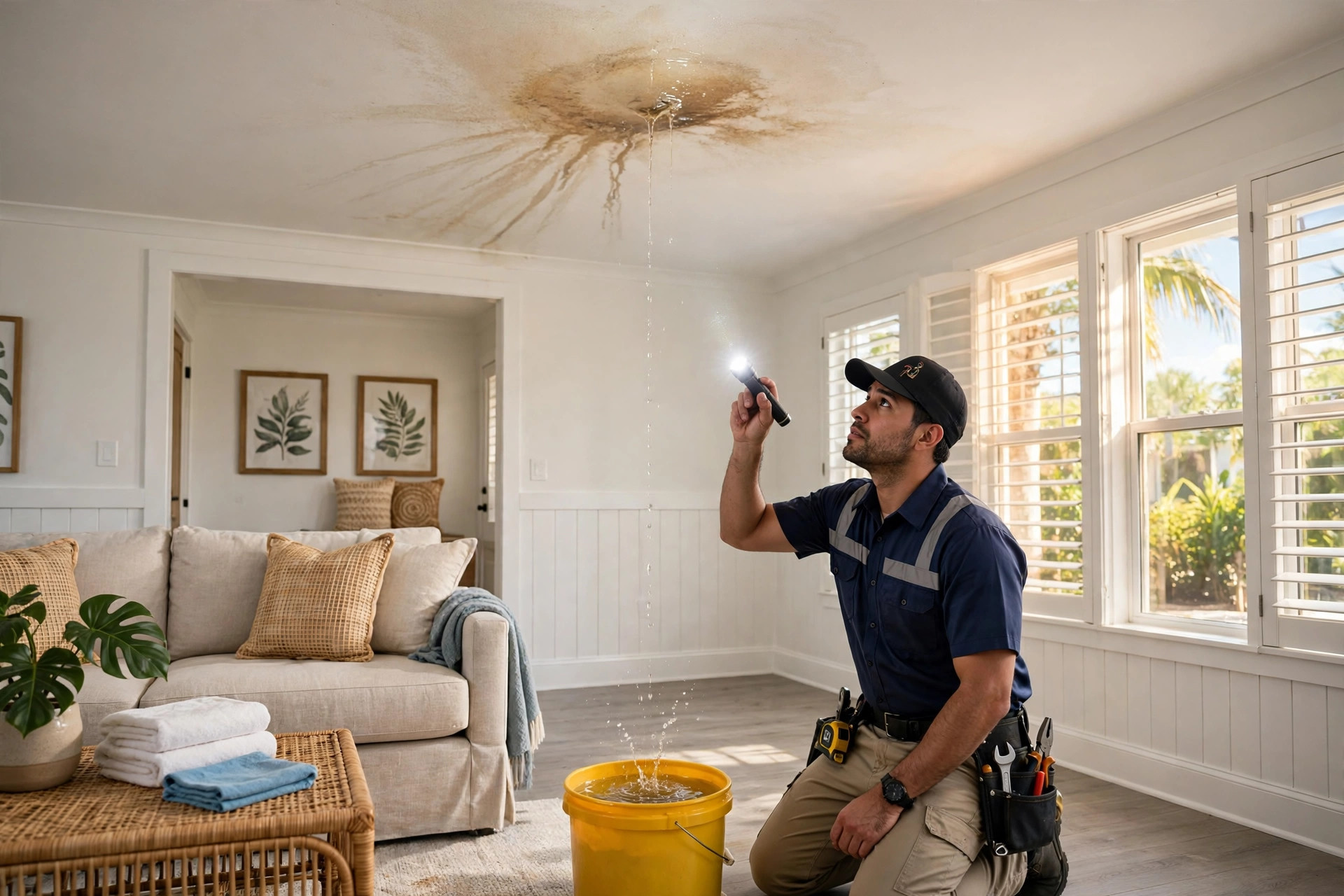
Do these things before you try to find the source — they limit the damage and keep you safe.
- Stop using that bathroom. No showers, no flushes, no running the sink. If the leak is tied to a fixture, every use feeds it.
- Shut the water off if you can do it safely. Close the toilet's supply valve, or the shut-off for the sink or shower. If the leak runs constantly no matter what, shut off the main water valve to the house.
- Protect the room below. Move furniture and electronics, put a bucket under the drip, and lay down towels. If the ceiling is bulging or sagging, do not stand under it — poke a small hole at its lowest point with a screwdriver so the trapped water drains into the bucket instead of bringing the whole ceiling down.
- Cut the power to the wet area. Do not touch light switches or fixtures in a wet ceiling. If water is near a light, fan, or smoke alarm, switch that circuit off at the breaker panel from a dry spot.
- Take photos and note the time. Dated photos of the stain, the drip, and the bathroom above help a plumber — and your insurer, if the repair turns into a claim.
Warning
A ceiling that is sagging, bulging, cracking, or shedding material can collapse without warning. Keep clear of the area underneath it and do not try to open the ceiling yourself. Drywall soaked through loses its strength fast, and there may be live wiring inside.