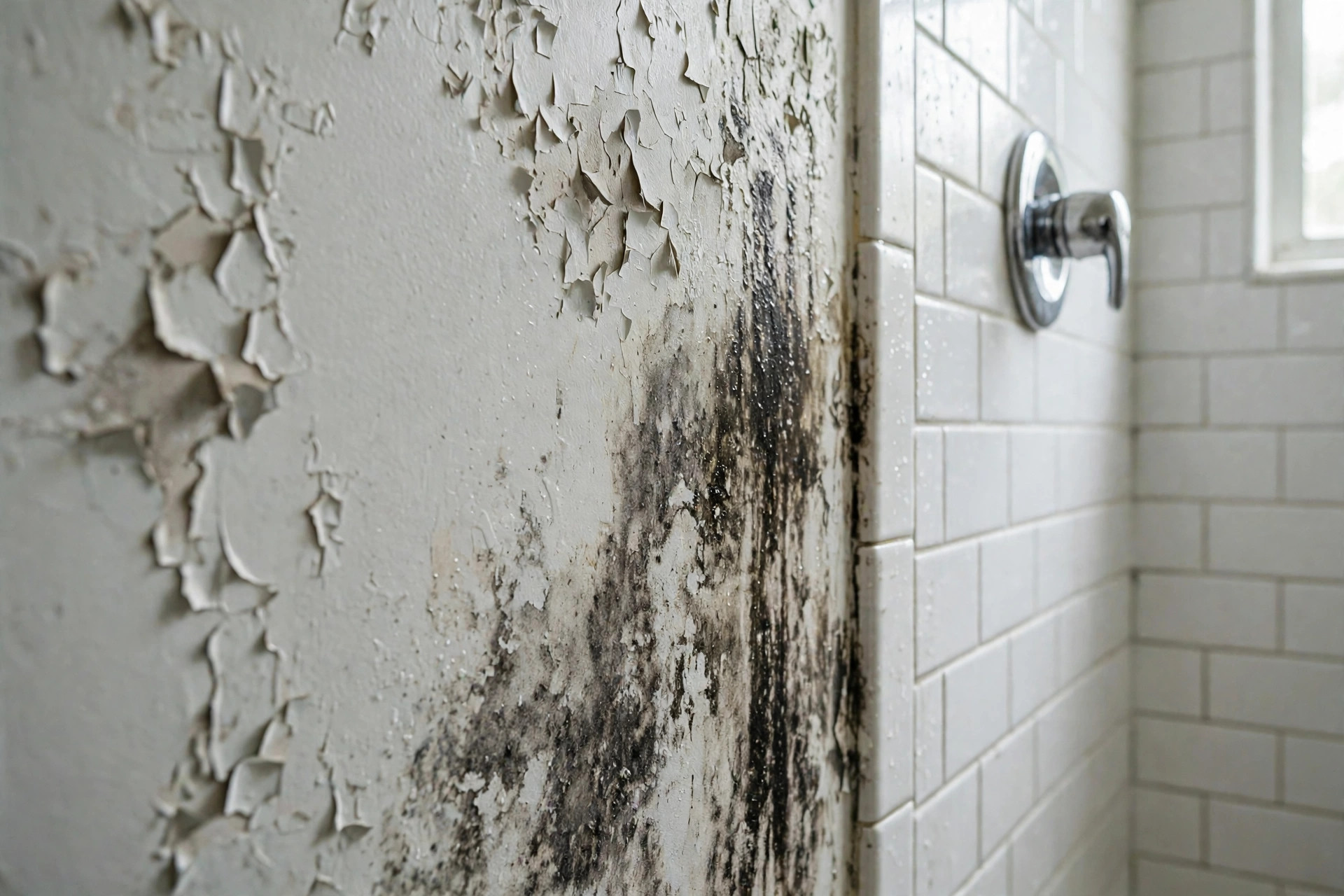
The good news is that there are only a few places the water can come from, and a simple timing test narrows it down before anyone opens the wall. This guide covers the five causes, how to tell them apart, and what to do first for each one.
Behind a typical shower wall there is a mixing valve, two supply pipes feeding it, a pipe going up to the shower arm, and one going down to the tub spout. At the bottom there is a drain, and under the tile a waterproofing layer or pan. A leak comes from one of five failures in that system.
1. A Worn Shower Valve or Cartridge
The mixing valve sits behind the shower handle and blends hot and cold water. Over time its cartridge wears out and its seals harden. A worn cartridge usually drips from the showerhead or tub spout, where you can see it — but a crack in the valve body, or a weeping joint where the supply pipes meet the valve, leaks into the wall instead. Because these parts are under pressure all the time, the leak keeps going even when nobody is showering. If the wall stays damp overnight or the wet area keeps growing on days the shower was never used, the valve or its connections are the prime suspect.
2. A Cracked or Corroded Supply Pipe
Copper supply pipes can develop pinhole leaks from corrosion, and plastic piping can leak at a damaged or badly installed fitting. Like the valve, a supply pipe is pressurized around the clock, so it leaks day and night — and it can release a surprising amount of water before anyone notices, because the water runs down inside the wall and only shows itself when it finds a seam or a ceiling below. In older Fort Myers homes, hard water and decades of heat and humidity accelerate corrosion at joints, which is why a supply-pipe leak often shows up in a bathroom that was remodeled years ago and never touched since.
3. A Loose Shower-Arm Connection
The shower arm is the short pipe that comes through the wall and holds the showerhead. Its threaded connection can leak when the seal deteriorates, the arm works loose, or someone overtightened it and cracked the fitting behind the tile — the drop-ear elbow at the top is a common weak point. Water escapes behind the decorative flange and runs down inside the wall. This leak appears only while the shower is running, which is itself a useful clue: if the wall is dry all morning and damp after every shower, the arm or the spray side of the system is where to look first.
4. A Failed Drain Seal or Shower Pan
Water can also escape at the bottom of the system. A loose drain gasket, a cracked shower base, or a torn shower-pan liner lets water under the floor, where it travels sideways into the wall framing — often with no visible sign in the shower itself. A tub spout that slips onto a copper stub can leak back into the wall if its set screw or O-ring has failed. These leaks appear only when water hits the tile or floor and then drains away, so the damp area often shows up after the shower, not during it. If water is staining the ceiling of the room below the bathroom, a failed pan or drain connection is a strong suspect — the leak is coming from underneath, not from the wall itself.
5. Failed Grout, Caulk, or Waterproofing
The most common source is not plumbing at all. Grout lines and caulk joints are a shower's first line of defense, and past the 10-year mark they crack, crumble, or pull away from the tile, letting water seep behind the surface with every shower. Grout itself was never meant to be the waterproofing — the membrane behind the tile is what actually keeps water out. When that membrane fails from age, poor original installation, or a puncture, water gets behind the wall regardless of how good the tile looks. This is the leak that gets expensive: a re-grout runs roughly $750–$1,500, while a severe structural case with rotted framing can reach tens of thousands of dollars. Grout lines that stay dark long after the shower has dried, or tiles that sound hollow when tapped or move slightly under your thumb, are the early warnings.
Do not assume cracked grout is only cosmetic. Grout is a finish material, not a waterproof layer. If the grout in one area stays dark after every shower, water is already getting past it — the question is whether the membrane behind it is still holding.