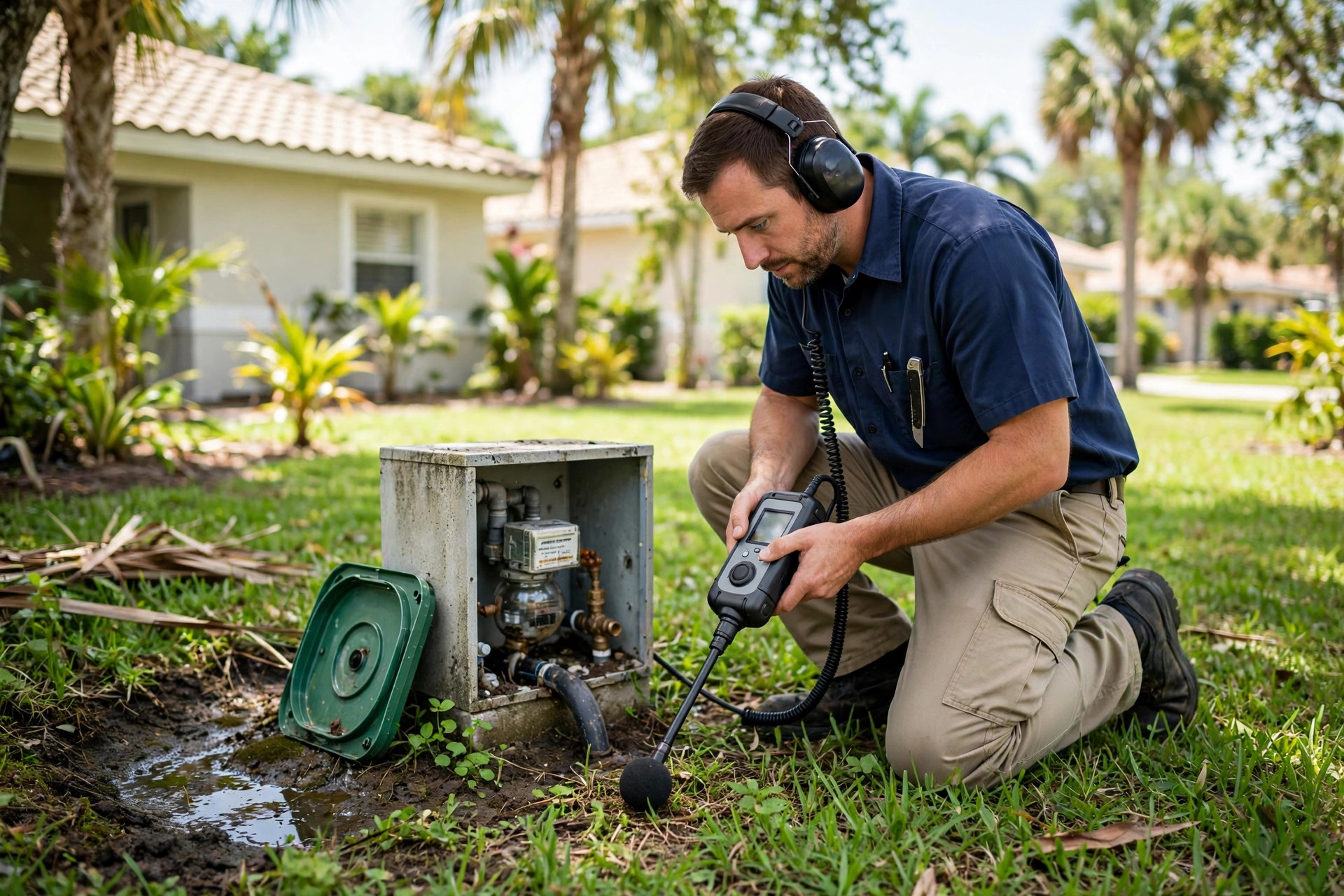
Before you call anyone, run the meter test. It is free, it takes fifteen minutes, and it tells you whose problem the leak is.
- Turn off everything that uses water — every faucet, toilet, washing machine, dishwasher, ice maker, and irrigation zone.
- Find your water meter (usually in a covered box near the street or property line) and note the reading, or watch the small leak-indicator dial.
- Wait 15 to 30 minutes without using any water, then read it again. If the dial moved, water is leaving the system somewhere — you have a leak.
- Now close the main shut-off valve to the house and watch the meter again. If the meter stops, the leak is inside the house. If the meter keeps moving with the house valve closed, the leak is underground, between the meter and your home.
That last result is the one that matters for this article. A meter that keeps spinning with the house shut off means water is escaping from the buried service line — and the next call depends on whether the break is before or after the meter itself. Water that leaks before it passes through the meter is the city's water; water that leaks after it is yours, and it is already on your bill.
Take a photo of the meter reading before and after the test. It is the evidence you will need for the utility, for a bill adjustment, and for your insurance claim — and it proves the leak was real and ongoing, not a one-off high-usage month.